
Christian Hypnotherapy: Faith-Based Healing for Mind, Body, and Spirit

If you’re reading this, the question has probably been on your mind for a while. Can hypnotherapy help me without compromising my faith? You may have prayed about it. You may have looked it up and read both sides. You may have a friend whose smoking, drinking, or anxiety changed in a way that surprised them — and now you’re wondering whether the same thing could happen for you.
This guide is the long answer. What hypnotherapy actually is, what Scripture says about the focused mental states it works in, what to watch for in a Christian practitioner, and what a session looks like when faith is the practitioner’s anchor rather than a layer added afterward.
What Is Christian Hypnotherapy?

Christian hypnotherapy is therapeutic hypnosis delivered by a Christian practitioner whose work is anchored in Scripture and shaped by Christian discernment from the first conversation onward. Scripture and Christian discernment shape the suggestions used in the focused state — they are not a prayer tacked on a secular session.
A session typically begins with a conversation about your wants and needs, what might be underneath them, and what God wants for you in this season of your life. That conversation drives the hypnotherapy work that follows. By the time we move into the focused state where the deeper subconscious work happens, the suggestions and imagery are drawn from Scripture and from what you and I have just talked through.
The focused state of hypnotic absorption itself is not new. It’s the same state your mind enters during deep prayer, biblical meditation, or being absorbed in a piece of writing that pulls you in completely. Secular medical science calls it the alpha-theta range. Scripture calls it being still. Hypnotherapy is a structured way of entering that state for a particular therapeutic purpose.
How a Christian Practice Differs From a Generic One
Four things change when the practitioner is Christian — what enters the suggestions you absorb in the focused state, and how:
- A practitioner who shares your faith. When the practitioner is Christian, the suggestions that reach you are faithful and driven by Christian values. You don’t have to wonder whether the practitioner sees faith as part of the problem or the best part of the solution.
- Scripture-anchored suggestions. Generic affirmations (“I am enough,” “I deserve happiness”) are not useful and not used. Instead we take a biblical perspective on what would help and the way we need to look at your issue. These are far more powerful than self-help language.
- Imagery from our shared Scripture. Many visualisations and metaphors are drawn from passages we all know — the still waters, the renewing of the mind, the lilies of the field. You aren’t asked to absorb New Age imagery you’d have to filter on the way out.
- Faith-aligned goals. What you’re working toward is shaped by the conversation that opens each session — including what God seems to be doing in this season of your life. We work toward the life God is calling you to, not a self-help version of who you’re supposed to become.
How Christian Hypnotherapy Actually Works

The Brain States Involved
Your brain operates in different rhythms depending on what you’re doing. Beta waves (active analytical thinking) dominate during ordinary problem-solving. Alpha waves (relaxed receptivity) take over when you’re absorbed in a book, watching a film, or sitting quietly. Theta waves (deep focus, vivid imagination, reduced critical filtering) take over during meditation, deep prayer, and the early stages of sleep.
Hypnotherapy works in the alpha-theta range. So does deep prayer. So does biblical meditation. The brain states involved appear very similar in neuroimaging studies — different in content, similar in form. This is not a coincidence. It’s the same capacity of the mind, used for different purposes.
In this state, the analytical filter that ordinarily blocks new ideas with reflexive “I can’t” or “that won’t work” responses becomes less active. Suggestions reach the part of the mind where habits and reactions live, and they can help unlearn old patterns. This is why hypnotherapy can produce change that talk therapy alone often cannot — talk therapy reaches the analytical mind that already knows what it should do; hypnotherapy reaches the part of the mind where the actual patterns live.
What a Session Actually Looks Like
A typical session in my practice goes like this:
- A conversation. We start by talking — about what’s happening for you, what might be underneath it, and what God seems to be wanting for you in this season of your life. This is the part that shapes everything that follows.
- Setting goals. Together we agree on what we’re working on in this session — the specific feeling, pattern, or unhelpful pattern we want to address.
- Induction. I guide you into a focused, relaxed state using specific language and imagery. You stay aware throughout. You can stop at any time.
- Delivery. While you’re in that state, we work on the issue using Scripture-anchored suggestions and visualisations, and imagery shaped by the conversation we just had.
- Coming back. I gently bring you back to full alertness. Most clients describe this as one of the most peaceful states they have experienced.
- Closing. We talk briefly about what came up, what to expect in the days ahead, and where we go from here together.
Throughout the process, you remain aware and in control. There is no point in the session where you “go under” or where you are unaware of what is going on. Without your willing cooperation, it will not work.
Why Scripture-Anchored Suggestions Land Differently
Generic affirmations are everywhere. I am enough. I deserve happiness. I trust the universe. They have a certain effect. But they’re also words coming from nowhere in particular — and the part of the mind where habits live notices when it’s being asked to absorb words that don’t connect to anything it trusts.
Scripture is the most effective tool because it is true and because it comes from God. Generic affirmations — I am enough, I trust the process — make claims with nothing behind them. When we say — we are loved by Christ, or cast all our anxiety on Him — that is a truth that God has revealed to us. The focused state lets both reach the part of the mind where habits are learned — but only Scripture brings truth and divine authority through that door.
Conditions Christian Hypnotherapy Can Help With
Hypnotherapy reaches the part of the mind where habits and reactions actually live — the part talk therapy doesn’t always quite touch. That makes it useful across a range of conditions, and the Christian framing changes the content that goes in. A short tour of the most common reasons people come, with deeper pages on the conditions where I do the most work.

Anxiety & Panic Attacks
The 3am chest. The verse that didn't quite reach. The alarm learned a pattern that fires before prayer or reason can get there. Hypnotherapy meets the part of the brain where the alarm actually lives.
Learn more →
IBS & Brain-Gut Pain
The morning bathroom math. The kit in the car. Your gut isn't broken — the signal that runs it learned to over-fire. Six-session gut-directed hypnotherapy, based on protocols NICE has recommended for nearly two decades.
Learn more →
Addictions & Compulsions
Smoking. Vaping. Drinking. Pornography. The habit she swore off Sunday and did again Wednesday — the same loop runs underneath all four. Hypnotherapy reaches the part of the brain willpower can't, with four deeper pages for the most-asked.
Learn more →
Pain Management
Back pain. Knee pain. Leg and ankle pain that has lasted past the tissue's healing. The pain is real; the brain-pain pathway learned to over-fire. Hypnotherapy retrains the signal — alongside any other treatment, no drugs, no side effects.
Learn more →
Relationships & Self-Development
The marriage you love and can't seem to stop straining. The temper that breaks loose when you swore it wouldn't. The version of yourself you keep trying to be and failing to maintain. What changes is your sense of who you are — your identity in Christ — not your behaviour-management toolkit.
Learn more →Where Christian Hypnotherapy Fits in a Christian’s Life
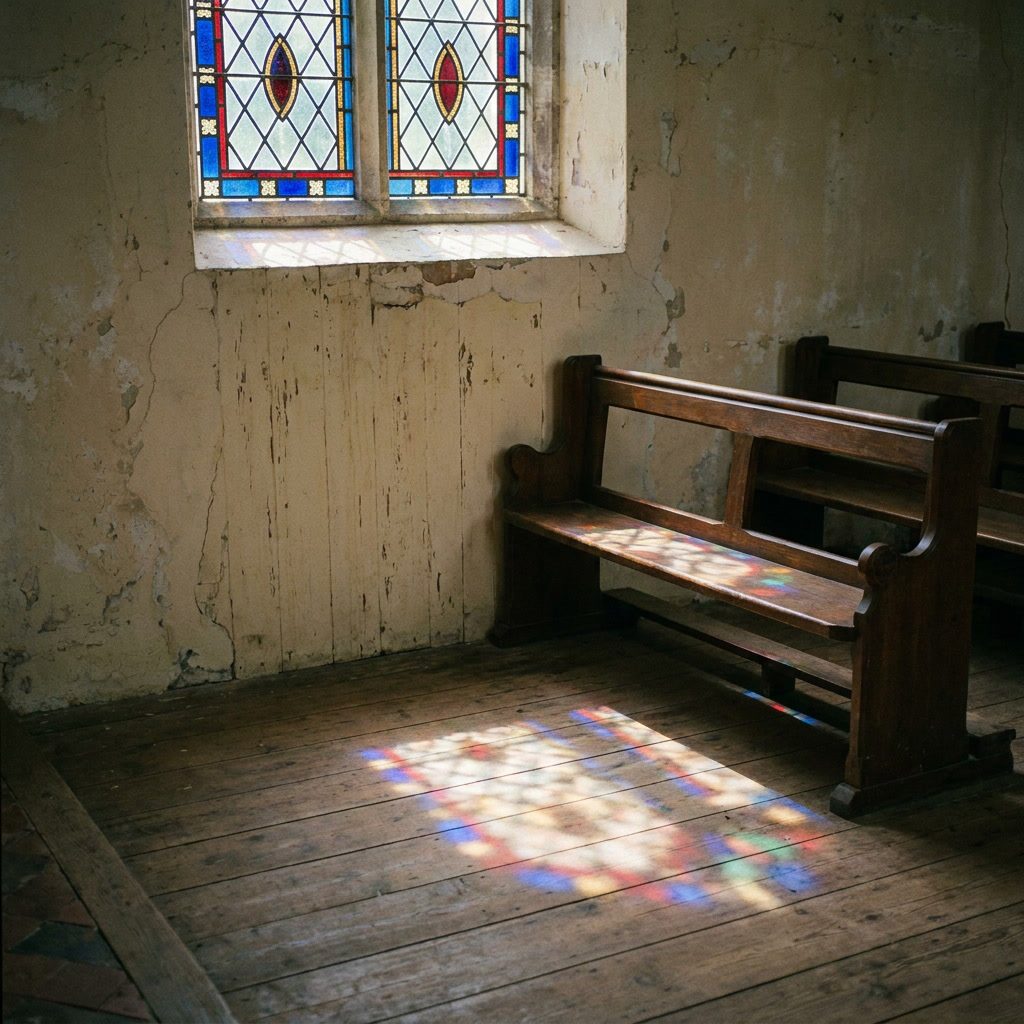
If you’ve been a Christian for a while, you’ve probably run into the same gap many of us have. You believe the truth. You can quote verse. You’ve prayed about the pattern troubling you. Yet the pattern still continues. That isn’t a failure of faith. Just like it wouldn’t be a failure of faith to head to the gym to put on muscle. It’s simply a tool that you need to use - hypnotherapy is that tool.
A few specific reasons hypnotherapy fits a Christian’s life unusually well:
-
It reaches the cue BEFORE the moment of choice — where confession and accountability can’t quite get. Confession addresses what already happened. Accountability software constrains what might happen next. Both work on the AFTER. But the cue that triggers the pattern — the 6pm tightness, the late-night reach, the snap at the kid — fires BEFORE the moment of choice arrives. That is what hypnotherapy works on directly. It is the missing piece in most Christian recovery stacks.
-
It completes what years of Christian counselling started. Many Christians who land here have done five, ten, fifteen years of Christian counselling. Counselling has done what counselling does — given you language for the pattern, named the wound underneath it, helped you understand where it came from. Hypnotherapy does the part counselling can’t quite finish: retraining the cue-pathway where the pattern actually fires. The two work in different parts of the mind. The gap between them is exactly where most stuck Christians get unstuck.
-
It is private clinical work — no disclosure to pastor, spouse, or small group required. Christian community is good. Confession to a wise pastor or accountability partner is a Christian discipline. But not every Christian is ready (or wisely positioned) to tell their pastor, their spouse, or their small group what they are working on. Hypnotherapy is private clinical work between you and a practitioner who carries the same faith. Nothing leaves the session. The work can happen quietly while your existing community stays intact.
-
It does not ask your existing prayer life to step aside. Some modalities subtly position themselves as the answer to what prayer is for — implying the prayer hasn’t worked because the prayer is the wrong tool. Hypnotherapy makes no such claim. Prayer is for what prayer is for; hypnotherapy is for what hypnotherapy is for. The two never compete for the same job. You leave with both intact — and usually a deeper appreciation for what each is actually for.
Hypnotherapy is a fourth tool, sitting alongside the three we already use. Prayer connects you to God. Scripture forms your mind. Church holds you in community. Hypnotherapy works to release bad patterns of thought and action.
Many of my clients are involved in their churches, see their pastors regularly, and pray each day. They come to hypnotherapy because they would like to change parts of their mental patterns that have become habitual. Hypnotherapy is most effective in exactly that context — alongside an active spiritual life, not instead of one.
If You’re Still Wondering
If you came here with concerns about safety or scriptural permission, the answers are below. Worth reading carefully — most Christians have some version of these questions, and the honest answers matter more than reassurance does.
Is It Safe? Addressing the Common Concerns
“Will I lose control?”
This is the most common fear, and it’s fundamentally a misunderstanding of what hypnotherapy is. You remain fully conscious throughout. You can hear me. You can open your eyes. You can reject anything I say that doesn’t sit right with you. You always remain completely in control.
Think of being deeply absorbed in a good book or in a worship service. You’re focused. You’re engaged. But you’re not unconscious. If someone tapped you on the shoulder, you’d respond immediately. That is roughly the state hypnotherapy uses.
“Could this open me to demonic influence?”
When you work with a Christian practitioner whose faith is examined and whose practice is anchored in Scripture, there is no spiritual exposure of the kind this question brings up. The focused state itself is morally neutral — it’s a brain state, not a spiritual posture. What matters is the content that fills it. In a Christian session, that content is Scripture.
Focus on the Family — one of the most respected conservative Christian organisations — states that there is “no reason to regard [hypnosis] as ‘evil’ or ‘dangerous’ in and of itself” and that there is “little or no basis for most of the popular fears associated with this technique.” They do recommend that Christians inquire carefully into the hypnotherapist’s belief system before working with them. That recommendation is exactly the right one — and it is the reason working with a Christian hypnotherapist matters.
“Is this different from occult practices?”
It is. Clinical hypnotherapy is a recognised therapeutic technique acknowledged by the American Medical Association and the American Psychological Association. The Catholic Church approved its therapeutic use under Pope Pius XII in 1956. There are no spirits involved, no fortune-telling, no supernatural manipulation — just structured work with the natural focused-attention capacities of the mind.
What Christian Leaders Have Said
Beyond Focus on the Family, you’ll find that mainstream Christian denominational positions on hypnotherapy as a clinical tool are largely permissive. The Catholic Church’s 1956 statement remains in force. Most mainline Protestant denominations hold no formal position against it. Evangelical leaders are split — some warn against it, others accept its therapeutic use under Christian supervision.
The clearest line of opposition tends to come from sources that conflate clinical hypnotherapy with stage hypnotism or occult practice — sources that often haven’t even looked at or studied the actual practice or consulted practitioners. If that’s all you know about hypnosis, then the objection is likely sincere but lacking in understanding. Bodies like the American Medical Association and the Australian Medical Association would not ratify these practices if they were irrational.
What Does the Bible Say About Hypnosis?

The Bible does not directly mention hypnosis as we know it today. But Christians who have wrestled with this question seriously almost always end up in the same two places — the Scriptures cited against the practice, and the Scriptures that describe focused mental states that look very much like the ones hypnotherapy uses. Both need a careful reading.
Scriptures Often Cited Against Hypnosis
The most common objection is anchored in Deuteronomy 18:10–12, which warns against sorcery, divination, and occult practices. The reasoning runs: hypnosis has some historical associations with Mesmer, who dabbled in some occult ideas, and so the practice must be based on that.
The objection is reasonable enough to be taken seriously — and it falls apart on closer inspection. Clinical hypnotherapy is not divination. It does not contact spirits. It does not predict the future. It is a therapeutic technique that works with the natural focused-attention capacities of the human mind that God designed. The historical association with Mesmer is real but no more relevant to modern clinical practice than alchemy is to modern chemistry.
The second objection comes from Galatians 5:22–23 — self-control as the fruit of the Spirit. The concern: if hypnosis means surrendering control of the mind, the practice goes against that guidance. This concern vanishes when you understand what hypnosis really is. There is no surrender. You remain fully aware. You can hear everything. You can (and will) reject any suggestion that doesn’t sit right with you. You can open your eyes and end the session at any moment. Hypnosis is a focused state, not a vacated one — closer to daydreaming than to sleep.
Scriptures That Describe the Focused States Hypnotherapy Uses
The Bible is full of references to focused mental states that look very much like what neuroscience now calls the alpha-theta range:
"Be still, and know that I am God."
Psalm 46:10
"Keep this Book of the Law always on your lips; meditate on it day and night."
Joshua 1:8
"…whose delight is in the law of the Lord, and who meditates on his law day and night."
Psalm 1:2
"Whatever is true, whatever is noble, whatever is right, whatever is pure, whatever is lovely, whatever is admirable — if anything is excellent or praiseworthy, think about such things."
Philippians 4:8
These verses describe focused attention — directed toward truth, sustained over time, receptive to God’s word. The brain state involved is not different (structurally) from what hypnotherapy uses. It is the same focused state, structured for therapeutic purpose.
And if you came to this page carrying anxiety, I’ve gathered 28 Bible verses for anxiety — grouped by what you’re feeling: worry, fear, heavy burdens, sleepless nights.
Historical Christian Perspectives
Throughout church history, Christians have practiced contemplative prayer and meditation that involved similar mental states. The Desert Fathers’ practice of hesychia — a Greek word for stillness — describes an inward quieting. Modern brain scans of contemplative monks confirm physiological changes — just like exercise for the body produces physical changes. The Quakers, the Pentecostals, and modern Christian contemplatives have all worked within variants of this same focused state. Hypnosis is neither new nor dangerous.
Finding the Right Christian Hypnotherapist
If you’ve decided to consider Christian hypnotherapy, the choice of practitioner matters as much as the choice of method. A few things to look for:
- Clinical credentialing. Look for a practitioner with a recognised diploma or certification in clinical hypnotherapy from an established institution. Self-taught is not enough.
- Faith depth. Inquire about the practitioner’s actual theological frame. “I’m a Christian” can mean very different things. It is fair to ask what kind of Christian, what their practice looks like in a session, and how their faith shapes what happens in the focused state.
- Practice approach. Ask how a session is structured — whether the conversation comes before the hypnotherapy, what the suggestions are anchored in, and how the practitioner handles points of theological disagreement.
- Experience with your concern. Ask about specific experience with the issue you’re bringing.
- Comfort and trust. Trust your instincts on the discovery call.
Questions Worth Asking
- How do you actually integrate Christian faith into the hypnotherapy work itself — not as a frame, but in the suggestions and imagery?
- What is your training and certification?
- What does a session typically look like, end to end?
- What is your experience with [your specific concern]?
- Are sessions available online, or only in person?
- What happens if something comes up in our conversation that you don’t agree with theologically?
Frequently Asked Questions
Is hypnotherapy a sin for Christians?
No. Hypnotherapy is a therapeutic technique, not a spiritual practice. When practised by a Christian hypnotherapist whose work is anchored in Scripture and shaped by Christian discernment from the first conversation onward, it is a tool for healing that honours faith.
Is hypnotherapy against the Bible?
No. The Bible never mentions hypnosis, and nothing in Scripture forbids the clinical use of a focused, relaxed state of attention. Scripture actually commends that same state — Psalm 46:10 says be still, and know that I am God, and Psalm 1 and Joshua 1:8 describe meditating on God's word. What the Bible warns against is divination and the occult, which clinical hypnotherapy is not. With a Christian practitioner the focused state is filled with Scripture, not emptied.
Is hypnosis a sin in the Catholic Church?
No. The Catholic Church approved the therapeutic use of hypnosis under Pope Pius XII in 1956, and that approval remains in force. The Church's caution is directed at divination and occult practices that seek hidden power or knowledge — not at clinical therapy that simply uses the mind's natural focused-attention state for healing. Used clinically, and especially with a Christian practitioner, it is not a sin.
Will I be unconscious during hypnotherapy?
No. You remain fully conscious and aware throughout. You'll hear everything, remember the session afterward, and can open your eyes at any time. The state is closer to deep prayer than to sleep.
Can hypnotherapy make me do things against my will?
No. You cannot be hypnotised to do anything against your values or beliefs. You remain in control throughout the session and can reject any suggestion that doesn't sit right with you.
How many sessions will I need?
This varies. Specific issues — sleep, social anxiety, work stress, marital tension — often respond in three sessions (the Renew package). Deeper work — depression, anxiety disorders, grief, trauma — typically takes five (Restore). Long-running habits and addictions usually need seven or more (Transform). The discovery call is where we figure out which fits your situation.
Can I do Christian hypnotherapy online?
Yes. Online sessions via video call are highly effective. Many clients find them more comfortable because they're already in their own space. I work with clients in Australia, the US, the UK, Canada, South Africa, and elsewhere.
What if I can't be hypnotised?
Almost everyone can. If you've ever been absorbed in a book, lost in a film, or quieted during prayer, you have already entered the state hypnotherapy uses. Some people enter it more easily than others, but very few people cannot enter it at all.
Is hypnotherapy covered by insurance?
This varies by provider and policy. In Australia, some private health funds cover clinical hypnotherapy under their natural therapies extras, though coverage has tightened in recent years. Check with your specific insurer.
How is this different from stage hypnosis?
Stage hypnosis is entertainment. Clinical hypnotherapy is therapy. Stage hypnotists select the most easily-hypnotised volunteers from large audiences and create dramatic shows. Christian clinical hypnotherapy is a serious, gentle, conversational practice focused on healing — with the suggestions drawn from Scripture and shaped by the conversation that opens each session.
What the Next Step Actually Is

If you’ve read this far, you already have a sense of whether this work fits what you’re looking for. The next step isn’t a commitment. It’s a 20-minute conversation — a discovery call — to find out whether you and I would work well together, and whether this is the right tool for what you’d like to change.
Some people use the discovery call to ask the questions this guide didn’t quite answer. Others use it to feel out whether the practitioner’s faith feels real to them. Either is fine. The discovery call is yours.
Book a discovery call to start a conversation. Or take the quiz for a quick read on which areas of your life might benefit most from this work.
The next step is a conversation.
A 20-minute discovery call to see whether we should work together.
AU$25 to confirm — refunded the moment we begin.