Christian Hypnotherapy for Addiction Recovery

A serene morning kitchen interior — sunrise light through a window onto a wooden countertop with a glass of water, a small ceramic bowl of fresh strawberries, rosemary in a jar, a worn leather notebook and an unlit candle

The habit you can’t pray your way past. The thing you swore you wouldn’t do again last Sunday and did again on Wednesday. The conversation with God that ends with please, just one more time and I’ll stop — and you don’t.

If that’s where you are, this page is for you. Christian hypnotherapy reaches the layer of the mind where addictions actually live — and it does so without asking you to abandon your faith or lean only on willpower that has already failed.

Why Addiction Doesn’t Listen to Willpower

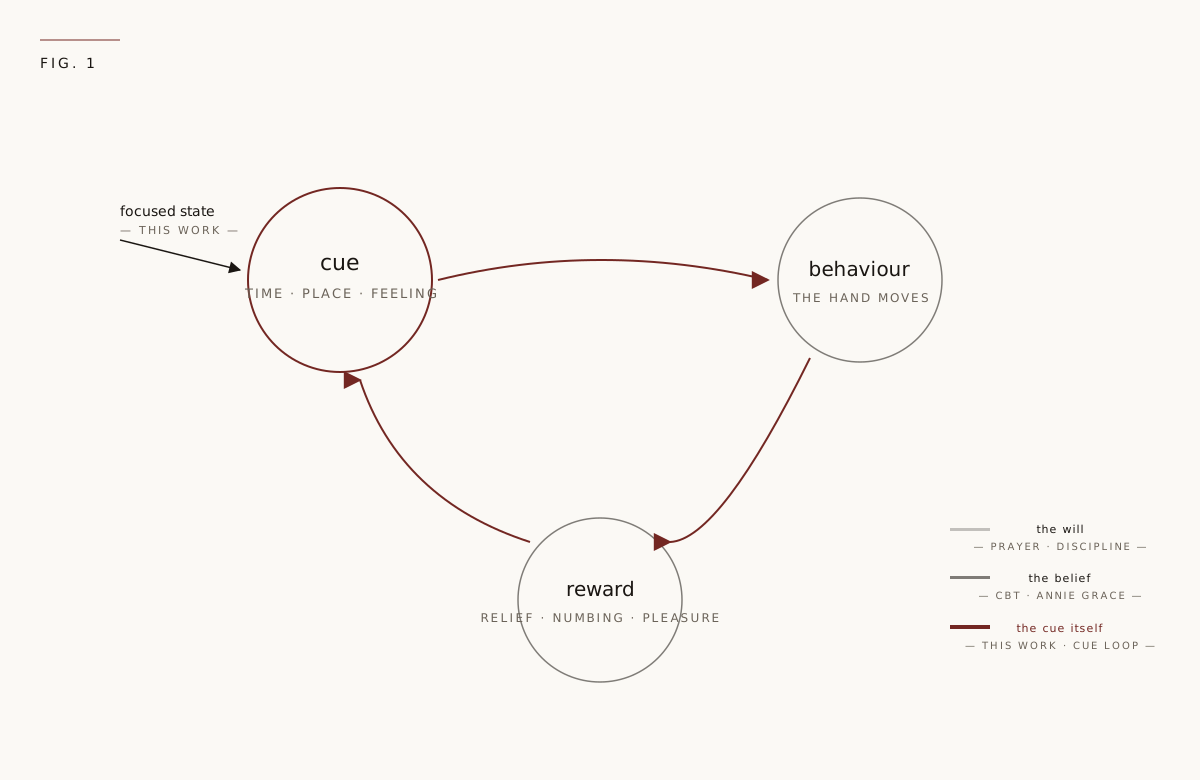
Addictions live in the part of your mind that runs without asking permission. The part that puts the cigarette in your mouth before you remember you’re trying to quit. The part that opens the porn tab while the conscious you is still saying no, not tonight. The part that pours the second drink before the first has finished.

That part is not the will. The will is the part of you that knows what you should do, has prayed about it, has sworn off the thing — and is then bypassed entirely the moment a trigger hits.

Willpower can fight this part. Willpower cannot reach it. That’s why so many faithful Christians come to hypnotherapy after years of trying everything else — accountability partners, deliverance prayer, Sunday-morning vows. Those things engage the conscious will. Addiction is being run by an older part of the brain that the will doesn’t have keys to.

Hypnotherapy has those keys.

How Hypnotherapy Reaches the Layer Where Addiction Lives

In a hypnotherapy session, I guide you into a focused, relaxed state — the same state your mind enters during deep prayer or biblical meditation. The brain calls it the alpha-theta range. Scripture calls it being still. In that state, the lower layer of the mind — the part that’s been running the addiction without your permission — becomes available for new instructions.

Then we work, gently, on replacing the trained patterns. The cigarette stops feeling like the thing that calms you. The drink stops being the only way the day softens. The compulsion that has been pulling you for years loses its grip — not because you’ve fought it harder, but because it has been replaced at the level where it actually operated.

You stay fully aware throughout. You can hear me. You can reject anything I say. You remain in control. The work is done with you, not to you.

How a Christian Session Differs

Recovery work changes when faith is present from the first sentence rather than added at the end. The differences:

  • Identity in Christ as the foundation. Generic addiction hypnotherapy works on patterns and triggers. Christian work goes one layer deeper — to who you are. I have been crucified with Christ and I no longer live, but Christ lives in me (Galatians 2:20). The change is sturdier when it’s anchored in identity rather than behaviour management.
  • Scripture-anchored suggestions. The suggestions used in the focused state aren’t generic affirmations like “I am free, I am healed.” They are passages you already know — no temptation has overtaken you except what is common to mankind. And God is faithful; he will not let you be tempted beyond what you can bear (1 Corinthians 10:13).
  • A practitioner who understands the spiritual weight. Addictions in a Christian’s life often carry shame and fear that secular practitioners don’t fully grasp. The conversation that opens each session can include what you’ve prayed, what you believe, what you fear about your standing before God. None of that has to be translated into clinical language first.

The Addictions This Work Helps With

Christian hypnotherapy is well-suited to most behavioural addictions and substance habits:

  • Smoking and vaping — including long-term smokers who have failed multiple quit attempts
  • Alcohol — for clients ranging from problem drinking to early-stage dependence
  • Pornography — including compulsive use that has resisted accountability software, prayer, and confession
  • Gambling — both casino and online, including sports betting habits
  • Compulsive eating — emotional eating, late-night eating, the patterns that resist diets
  • Cannabis and other recreational substance use
  • Compulsive shopping or spending — when the relief loop has become a problem
  • Phone, screen, or social-media compulsion — patterns that feel out of control

For severe physical dependence (heavy alcohol, opioids, benzodiazepines), hypnotherapy works alongside medical detox rather than replacing it. We discuss this on the discovery call to make sure the right pathway is in place.

What to Expect From the Sessions

Long-standing habits and addictions don’t shift overnight. The work is structured for sustained change rather than quick fixes that don’t last.

  • The Renew package (3 sessions) suits a focused habit that you’re ready to deal with — a particular trigger, a recent slide, a habit that hasn’t yet become deeply rooted.
  • The Restore package (5 sessions) suits more entrenched patterns — depression-linked drinking, anxiety-linked smoking, compulsive use that has multiple roots.
  • The Transform package (7 sessions) is the right fit for long-standing addictions and the work of building lives that don’t need them — pornography, alcohol, smoking, gambling, weight management. This is the package most addiction clients use.

A typical session runs about 60 minutes. We start with a conversation — what’s been happening, what you’ve tried, where God seems to be in this. Then I guide you into the focused state and we do the deeper work. Most clients describe leaving each session feeling lighter and clearer about what’s been driving the pattern.

Sessions are available online worldwide or in-person at the Eltham, Melbourne clinic.

Frequently Asked Questions

How many sessions do I need to quit smoking, drinking, or porn?

Most addiction clients use the Transform package (7 sessions). Some lighter habits resolve in fewer; some need more. We figure out the right starting point on the discovery call.

Can hypnotherapy stop me from craving entirely?

For many clients, yes. The Susie Tiller review on our homepage describes exactly this: years of failed attempts to cut down on drinking, then “no desire for a drink, no yearnings, no cravings, nothing” after a course of sessions. Results vary by person and addiction, but full extinction of cravings is a realistic outcome for many people.

What if I relapse?

Relapse during the work isn’t failure — it’s information. We use it to find what we hadn’t yet reached. The point of structured sessions over weeks rather than a single visit is precisely to give the work room to find the deeper layers when the surface ones have been addressed.

Does this work for pornography?

Yes. Pornography is one of the addictions Christian hypnotherapy is particularly well-suited to, because the work doesn’t shame the client and doesn’t rely on willpower-based methods that have already failed. The shift happens at the level of compulsion, not at the level of your view of yourself.

Is there confidentiality?

Yes — strict confidentiality. What is said in a session stays in the session. There is no reporting, no record sharing, no notification of any other party. The clinic operates within Australian therapeutic confidentiality standards.

Is hypnotherapy a sin?

No — read the complete answer here. The short version: hypnosis is a focused mental state, not a spiritual practice. When the content that fills the state is Scripture, the work honours rather than compromises faith.

The Next Step

If you’re ready to stop fighting alone, the next step is a no-obligation 20-minute discovery call. We’ll talk through what’s been happening, what you’ve tried, and what’s possible from here. No pressure — just clarity about whether this is the path forward.

You can also take the quiz for an indicative read on what you might be working with, or read the complete guide to Christian hypnotherapy for the longer answer about the practice itself.

The next step is a conversation.

A 20-minute discovery call to see whether we should work together.